

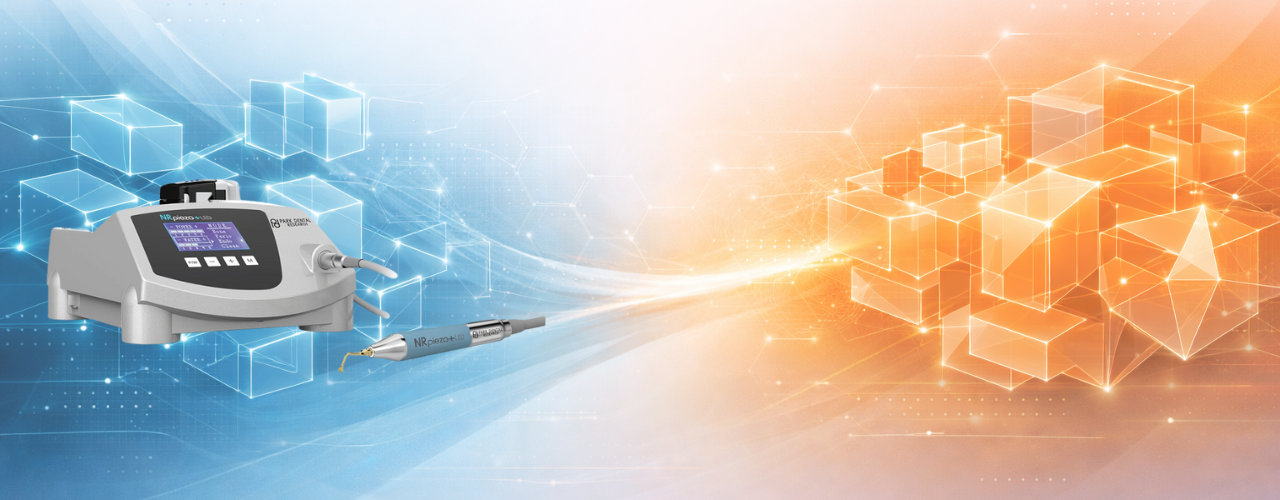
Piezo ultrasonic surgery has become part of everyday implant workflows, especially in narrow ridge cases where small decisions have outsized consequences. As new technologies continue to enter the market, many clinicians still gravitate toward systems they trust to deliver consistent performance, clear visibility, and hands-on surgical control.
In narrow ridge cases, the margin for error is small, which is why narrow ridge-specific implant systems like Startanius narrow ridge implants are designed to work within those limitations.
That is why many clinicians continue to select the NRpiezo + LED as a piezo system for narrow ridge surgery. Its value is not tied to novelty, but to reliability, surgical feel, and alignment with established clinical workflow.

Narrow Ridge Surgery Demands Control, Not Guesswork
Narrow ridge cases leave little room for error. Osteotomy width, depth, and alignment are not forgiving variables. Small miscalculations can quickly translate into lost bone or compromised stability at implant placement.
In these situations, surgeons often prefer systems that respond directly to their inputs rather than those that attempt to automate decision-making.
By allowing clinicians to manually control power, frequency, and irrigation parameters, the system supports site preparation that can be adjusted based on bone density and clinical conditions. This becomes particularly important when transitioning between bone qualities within the same case.
In narrow ridge surgery, precision is critical, as small deviations can increase the risk of complications.
LED Visibility Where It Actually Matters
Visibility often determines how confidently a surgeon can work, particularly in piezo-assisted procedures where progress is incremental rather than aggressive. The integrated LED handpieces on the NRpiezo + LED provide focused illumination directly at the surgical site, improving visibility in deep or confined areas where overhead lighting can fall short.
That added visibility becomes especially important during conservative osteotomy preparation, where progress happens in small increments and each adjustment matters. Enhanced visualization allows clinicians to better observe tip position, depth progression, and bone response during site preparation. For many surgeons, this level of visibility becomes an important part of their surgical workflow.
A System Designed for Bone Preservation
Operating within the ultrasonic frequency range used for osseous surgery, the NRpiezo + LED is intended to support selective cutting of mineralized tissue while limiting disruption to surrounding soft structures.
For a step-by-step clinical workflow, refer to the Startanius NRI Surgical Protocol
This controlled cutting action is intended to support bone preservation and reduced surgical trauma, both of which are central goals in narrow ridge implantology.
When paired with narrow ridge implant systems and conservative surgical protocols, the NRpiezo + LED enables osteotomy preparation that adapts to bone density rather than reshaping the site to match a predetermined drill diameter. The result is a workflow intended to work with existing anatomy rather than reshaping the site to accommodate a specific tool.
Why Many Surgeons Still Prefer Manual Precision
Automation and intelligent assistance are becoming more common in surgical devices, but many experienced clinicians still prefer systems that leave the final decisions in their own hands. The NRpiezo + LED is designed to support this approach.
Having direct control allows surgeons to:
-
Adjust parameters based on tactile feedback
-
Respond immediately to changes in bone density
-
Stay aligned with established surgical protocols
-
Maintain a consistent surgical feel from case to case
For many practices, this level of control may contribute to confidence and consistency across procedures.
How the NRpiezo + LED Fits into the Broader Technology Roadmap
As piezo technology continues to evolve, newer systems are introducing intelligent assistance features designed to optimize settings and streamline workflows. The NRpiezo + AI represents this next phase, adding automation on top of the same core ultrasonic platform.
What hasn’t changed are the clinical fundamentals.
If you want the full clinical context on case selection and why narrow ridge protocols have changed, here’s our deep dive on Startanius NRIs.
Precision osteotomy preparation, bone preservation, and controlled surgical technique remain the foundation of successful narrow ridge surgery. The NRpiezo + LED already delivers those fundamentals today, without asking clinicians to rethink their workflow or postpone progress while waiting for future releases.
For many practices, adopting a proven system now simply makes more sense than delaying implementation for incremental features. 
Proven Performance, Available Now
The NRpiezo + LED continues to be selected by clinicians because it aligns with how narrow ridge surgery is performed. It emphasizes control over automation, precision over force, and preservation over removal.
For clinicians looking to integrate or expand piezo ultrasonic capability within their implant workflows, the NRpiezo + LED offers a reliable, immediately available solution built on sound surgical principles.
In narrow ridge surgery, clinicians often value tools that support consistent precision across cases.
If you’d like help evaluating whether the NRpiezo + LED is the right fit for your narrow ridge workflow, contact our team.
Share:
The Evolution of Narrow Ridge Implantology: From Grafting Dependency to Precision Surgery
From Curiosity to Clinical Discipline: Dr. Bulard’s Columbia Lecture